









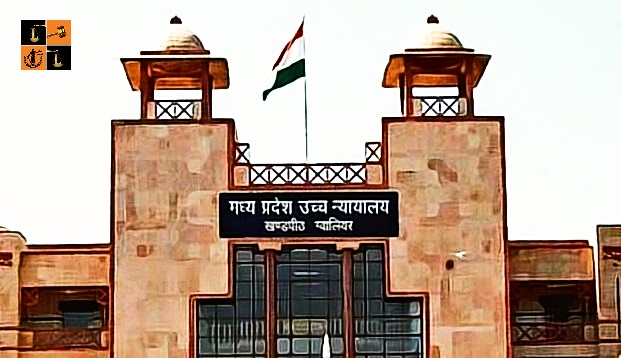
Recently, while addressing a challenge involving the legality of triple talaq after the Supreme Court’s landmark intervention in Shayara Bano v. Union of India and Ors, the Madhya Pradesh High Court examined whether a Muslim husband could still seek a court declaration validating an oral triple talaq allegedly pronounced before the practice was declared unconstitutional. The Court closely scrutinised whether such a suit could survive in law when the very basis of the declaration sought had already been held arbitrary and violative of constitutional guarantees.
The controversy began when a Muslim man filed a civil suit seeking a declaration that he had legally divorced his wife through triple talaq pronounced in January 2015 in the presence of two witnesses, followed by a written talaqnama sent by post. During the pendency of the proceedings, however, the Apex Court in Shayara Bano v. Union of India and Ors struck down instant triple talaq as unconstitutional.
The wife thereafter sought rejection of the plaint under Order 7 Rule 11 CPC, arguing that no declaration based on triple talaq could legally survive. Faced with this objection, the husband later amended his pleadings and claimed that the talaq had not been pronounced in one sitting in 2015, but in stages between 2013 and 2014. The wife opposed this shift, contending that the amendment was merely an attempt to escape the legal consequences flowing from the Top Court’s verdict against triple talaq.
Justice Vivek Jain found that the original plaint and talaqnama consistently referred only to the triple talaq allegedly pronounced on January 14, 2015, and that the later amendment introducing earlier pronouncements was an afterthought aimed at bypassing the effect of the Shayara Bano Judgment.
The Court observed that “The suit in question is also vexatious and frivolous piece of litigation seeking declaration on the basis of oral triple talaq and no such declaration can be granted as per law.” Stressing that courts can invoke Order 7 Rule 11 CPC to terminate legally untenable proceedings at the threshold, the Bench held that the relief claimed in the suit was barred by law.
Consequently, the Court rejected the husband’s plaint while granting him liberty to seek divorce on any other grounds available under law.
Case Title: Smt. Rubina Kavi Vs. Rizwan Ali
Case No.: Civil Revision No. 773 of 2024
Coram: Hon'ble Mr. Justice Vivek Jain
Advocate for the Petitioner: Adv. Mukhtar Ahmad
Advocate for the Respondent: Adv. Devendra Kumar Gangrad
Read Judgment @Latestlaws.com
Picture Source :




















